
3D Printing and Bioprinting
ECM-based bioinks that replicate natural tissue properties for the biofabrication of complex structures with defined microarchitecture.
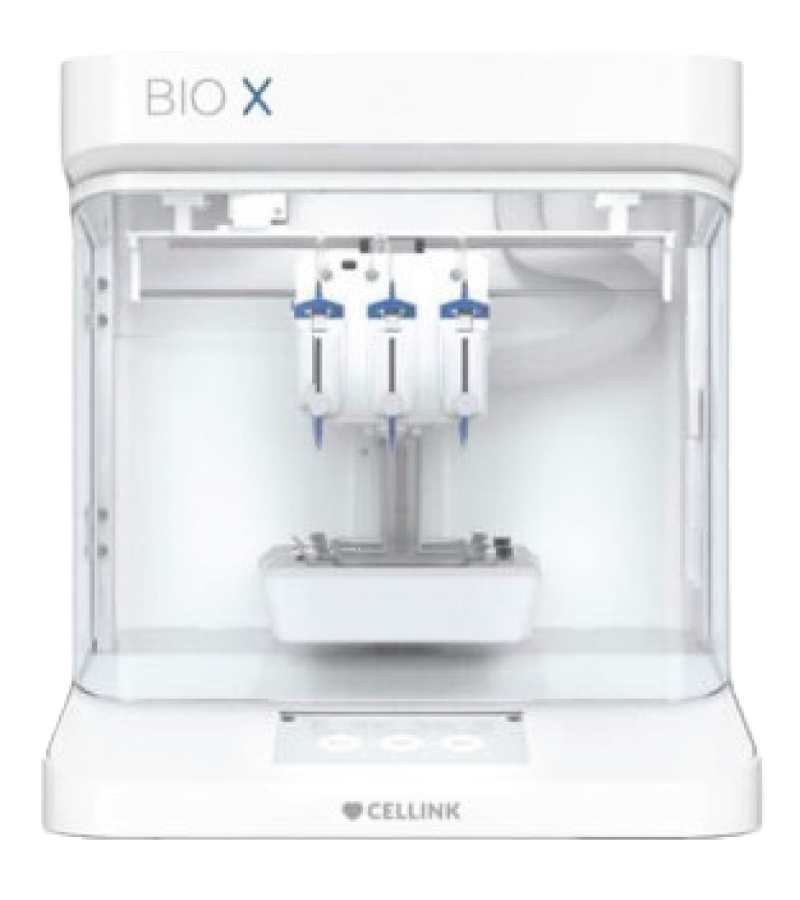
3D Printing at Viscus Biologics
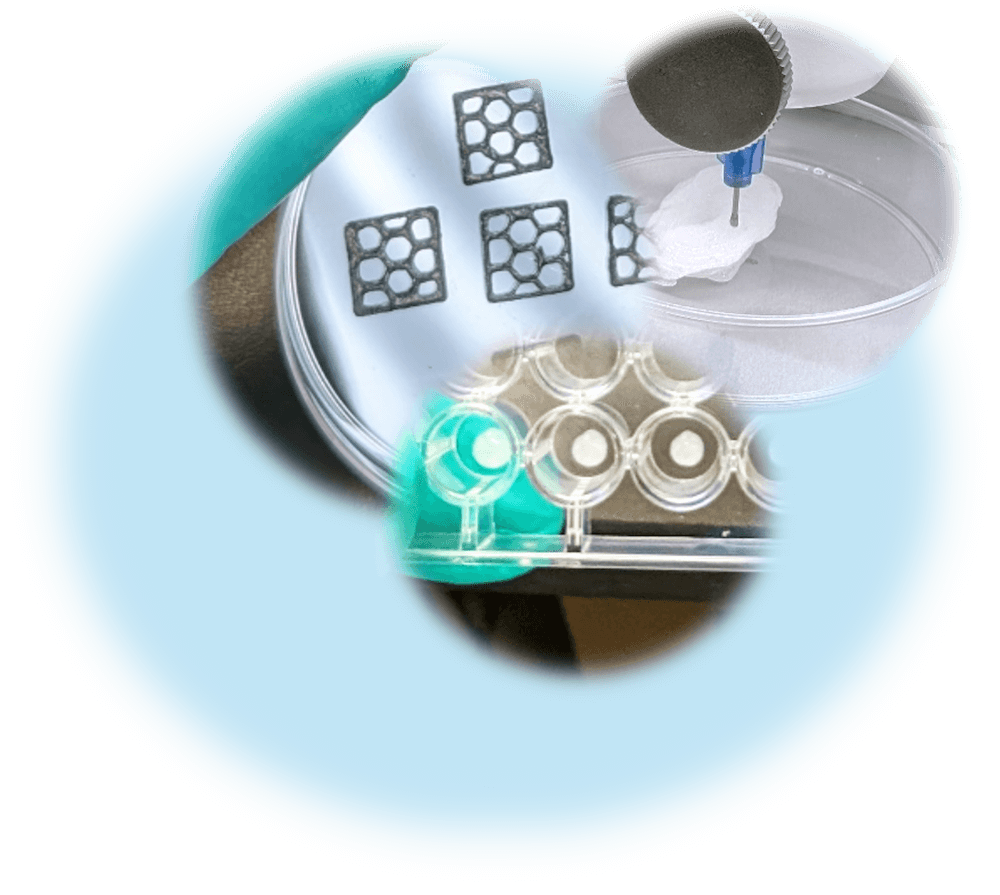
We offer 3D printing services of our products with BIO X6 3D bioprinters (CELLINK, Sweden). These state-of-the-art and established bioprinters can fabricate scaffolds with up to 1.00 µm movement resolution and 160 µm fiber diameter or above. Our ECM-based bioinks can be tested in both pneumatic and mechanical extrusion set ups. As manufacturers of LifeSupport™ (FluidForm Bio, MA) gelatin-based 3D printing support, we also possess FRESH printing capabilities for enhanced resolution in the fabrication of complex tissue-like structures.
The DNA Studio software (CELLINK, Sweden) allows us to design complex 3D structures at customer demand using extended formats such as .cad and .stl. We can work with your submitted files or generate a design for you, all based on your requirements.


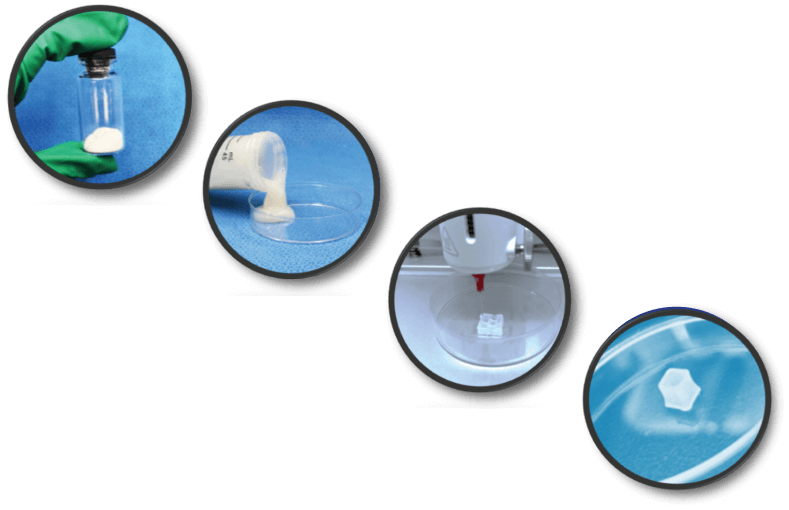
From Decellularized Powdered Tissue to 3D-printed Structures.
From Tissue to Bioprinting
Our VitanatiV™ ECM technology is the basis for the development of solubilized ECM for bioprinting purposes. Our cell-free ECM preserves the native tissue’s main structural and biological cues, recreating the ideal and tissue-specific microenvironment for cell attachment, proliferation and tissue-specific signaling.
Once a tissue is isolated and decellularized, it undergoes a micronization and solubilization process so that it can be effectively printed in common 3D printing setups. These products are available in their micronized or solubilized formats, so you can implement your own protocols to develop your own bioink. In addition, Viscus Biologics offers a fibrillar collagen porcine ink, that can be combined with tissue specific ECM to obtain an easily printable ink.
Our facilities include large batch processing infrastructure, high-capacity freeze driers, and cryomilling equipment to process any tissue you require at the size lot you need, from research use only to GMP-grade products. Furthermore, if you require sterilized material fabricated in a controlled environment, our processing in certified clean room facilities combined with validated sterilization processes ensure the reproducibility and safety of our products.
From Decellularized Powdered Tissue to 3D-printed Structures.
Tuning Stability and Stiffness
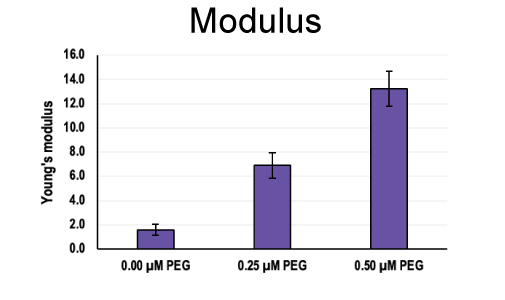
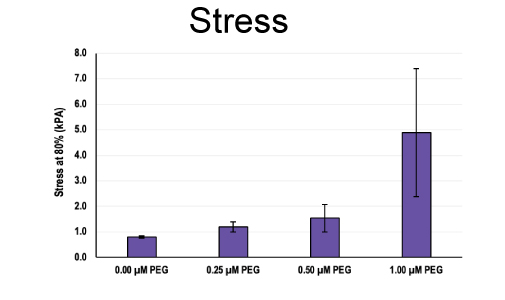
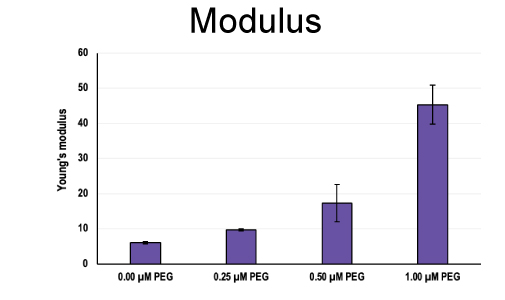
While relevant biological cues are maintained through micronization and solubilization of ECM, the process results in the loss of mechanical integrity. Crosslinking technologies are implemented to form new inter- and intramolecular bonds within the ECM bioink, improving their mechanical robustness. By increasing the collagen and/or solubilized ECM concentration, the solubilized ECM stiffness can be augmented.
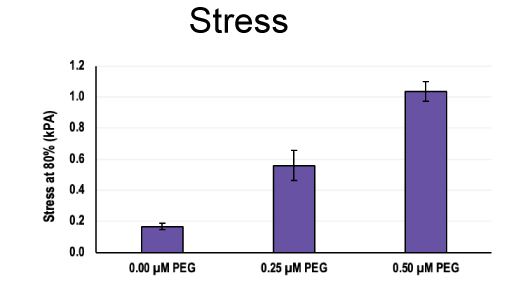
The mechanical properties of our 3D-printed materials can be further enhanced by photo-crosslinking, chemical crosslinking, or combination with fibrillar collagen. For instance, 4-arm polyethylene glycol (PEG), a non-cytotoxic FDA-approved crosslinker, can be combined with solubilized ECM to effectively tune mechanical properties as shown below. This biofabrication strategy can be used to recreate stiffnesses similar to a tissue of interest or study the effects of defined mechanical properties on cell function.
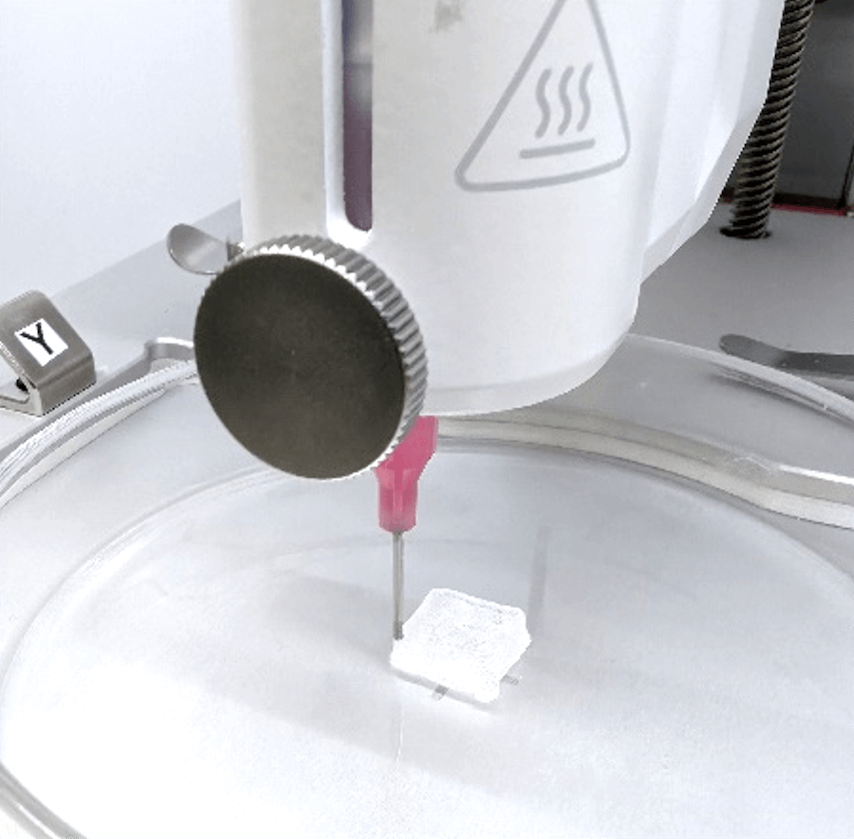
Tunable Mechanical Properties of 3D-printed Constructs.
Tuning Enzymatic Resistance and Degradation
Similarly to mechanical properties, the durability and stability of an ECM construct can be altered by additional processing and crosslinking. The crosslinking effect in ECM constructs alters their resistance to enzymatic degradation, where more crosslinking (in means of crosslinker concentration or efficiency) translates into longer resistance.
The resistance to degradation to collagenases (MMP-1) of ECM-specific constructs can increased by crosslinking with agents such as polyethylene glycol (PEG) as shown below. This technology can be used to alter the stability of your constructs upon implantation or to control the release of compounds embedded within the 3D-printed ECM.
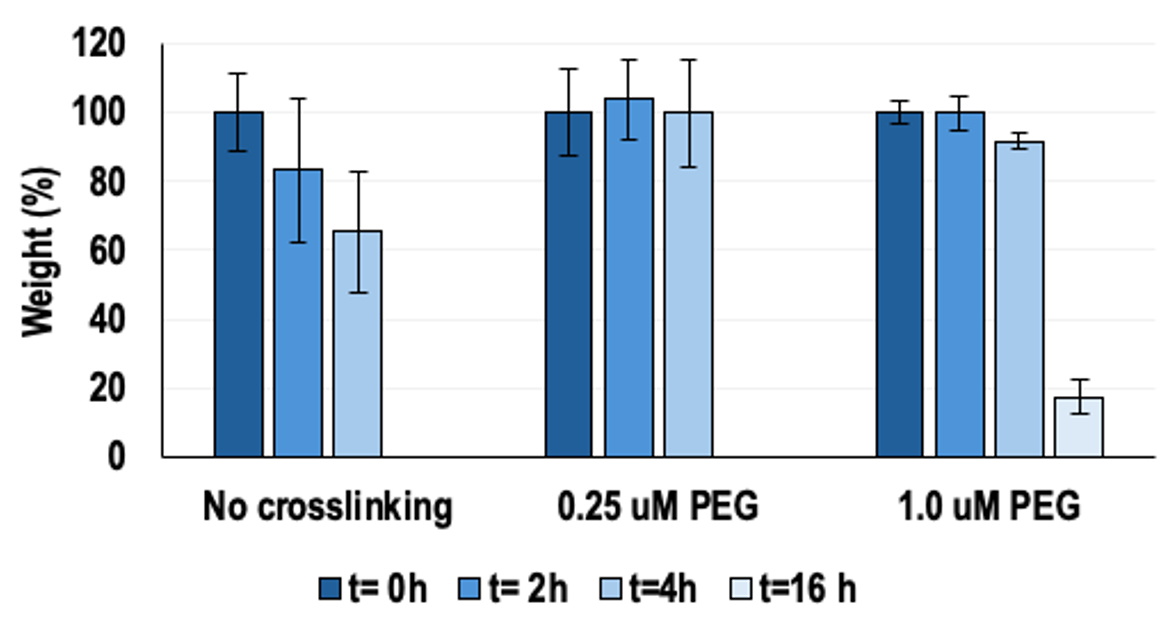
Resistance to Enzymatic Degradation is Increased by Crosslinking.
Extracellular Matrix
Biomaterials
Medical
Applications

Design
Services

Contract
Manufacturing